Executive Summary
Aviation connectivity is advancing rapidly, shaped by rising expectations among passengers and operators alike for smooth travel experiences. Commercial airlines, business jets and private plane owners, as well as government and military users, all demand faster and more reliable broadband communication. Thus, pushing the aircraft industry to seek innovative solutions that meet these evolving needs.
To address this need, electronically steered antenna (ESA) terminals have ushered in a new era of in-flight connectivity, a game changer to meet the growing connectivity demands of today’s passengers and the aviation industry as a whole. ESA technology enables seamlessly connectivity to Low Earth Orbit (LEO) and Medium Earth Orbit (MEO) satellite constellations in addition to Geostationary Earth Orbit (GEO) satellites. These diverse communication options enable high-speed internet, real-time entertainment, and operational enhancements across all aviation segments, representing a transformative leap forward.
Gilat ESA terminals – SideWinder and ESR2030Ku – are already being deployed in hundreds of aircraft and are in high demand in conjunction with the fast-growing LEO network market. The ability of these antennas to connect to LEO constellations as well as switching between orbits is crucial for maintaining a continuous and robust communication service over a global coverage area.
In this blog, we explore how ESA terminals and advanced satellite networks – LEO/MEO and multi-orbit networks – are transforming connectivity for all types of aircraft, setting the stage for lasting value and enduring satisfaction.


Variety of SATCOM Solutions for Specific Needs
Satellite communications (SATCOM) have evolved to offer a diverse range of solutions tailored to the unique requirements of different users and industries. In the past few years airlines and aircraft operators enjoy access to a growing variety of satellite network options.
Among the most significant advancements are the development of LEO and multi-orbit networks. Each of these networks brings distinct benefits to the table. LEO networks feature constellations of low-altitude satellites, delivering stable, continuous global coverage with minimal lag or interruptions. Their ultra-low latency broadband supports interactive cloud-based applications, smooth video conferencing and fast data exchanges. The snappy response of the LEO network enables the use of real-time applications that were previously with limited availability for passengers, due to unsatisfactory performance.
In addition to high throughput LEO networks, aircraft operators can utilize GEO satellites known for their extensive coverage and reliability. This diversity allows for customized connectivity solutions based on aircraft type, flight route, passenger profile, and operational requirements. For instance, long-haul flights may require GEO satellite coverage over territories that don’t allow LEO service, due to regulatory constrains, while utilizing LEO coverage in other parts of the flight routes. GEO coverage can also assist in supporting gate-to-gate operations by enabling overlay of additional satellite capacity over airports located in large metro areas that are typically short in satellite capacity.
Overall, the diverse and open networks enable aviation stakeholders to adapt to market changes quickly and to future-proof their terminal hardware investments, ensuring that they remain competitive as connectivity standards continue to rise.
Electronically Steered Antennas: Unlocking New Possibilities
Electronically Steered Antennas (ESA) represent a major technological leap in in-flight connectivity. Their low-profile design reduces aerodynamic drag, contributing to fuel efficiency and making ESA terminals easier to install on a wide range of aircraft.
By eliminating the mechanical components found in older antenna designs, ESAs dramatically improve reliability and reduce maintenance requirements. Their solid-state architecture means fewer points of failure, which translates into lower operational costs and increased uptime for airlines.
ESA terminals use advanced electronic beamforming to track satellites precisely, and allow ultra-fast satellite and beam switching, even as an aircraft moves at high speeds and changes direction. Those attributes enable continuous passenger connectivity and seamless handoffs between satellites and orbits.
Looking ahead, ESA technology is expected to facilitate new business models within the aviation industry, such as real-time data analytics, enhanced passenger personalization, and advanced crew coordination. As the demand for bandwidth continues to rise with the proliferation of smart devices and cloud-based applications, ESA Satcom terminals will empower airlines to scale their connectivity solutions efficiently. The combination of robust performance, scalability, and cost-effectiveness positions ESA terminals as a transformative force, reshaping how airlines deliver value to their passengers and adapt to future technological breakthroughs.
Gilat Offers a Full ESA Portfolio for Any Need
Gilat is a long-time aviation technology leader developing ESA products for over a decade. Today Gilat is supplying a portfolio of ESA terminals to the largest aviation service providers. Those terminals enable inflight connectivity in all aviation domains to an assortment of aircraft types answering a variety of needs. Gilat also provides turnkey services, including installation, certification, and integration of aircraft systems. To date approximately a million passengers per week benefit from Gilat’s ESA terminals.
Gilat’s ESA satcom terminals feature open standard interfaces, allowing straightforward integration with multiple aviation modem types. This reflects Gilat’s dedication to ensuring interoperability with all current SATCOM network infrastructures.
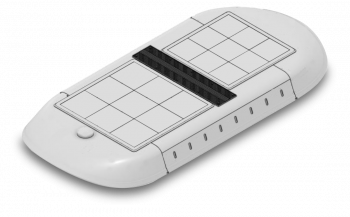
Gilat’s SideWinder is the only multi-orbit LEO/GEO ESA terminal currently in the market with over 500 installed in the last 18 months. The terminal is embraced by world-class service providers such as SES (formerly Intelsat), Panasonic, and Gogo and by some of the world’s largest airlines. SideWinder is also currently integrating with sovereign networks, allowing customers to connect to multiple services, including their own state-owned satellites, in any orbit from a single antenna array. Furthermore, SideWinder is in advanced certification process for line-fit with Airbus and Boeing.
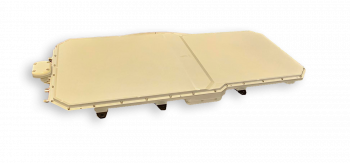 Gilat’s ESR2030Ku is a “LEO-only” terminal designed in partnership with Gogo (formerly Satcom Direct) to specifically unlock the highest possible bandwidth from Eutelsat’s OneWeb network. ESR2030Ku ESA is a low profile compact full-duplex antenna with over twice the performance of competing terminals. It’s outstanding capability in a small-form, power efficient device that permits data to be sent and received simultaneously enabling an always-on connection. The ESR2030Ku is available with over 100 terminals expected already to be shipped in 2026.
With the penetration of global LEO networks and sophisticated ESA technology, Gilat marks a redefinition of passenger experience and a reshaping of the future of air travel. Gilat with key service providers and aircraft manufacturers is customizing the technology to fit the optimal antenna to meet various aircraft types and missions.
For more information, please contact info@gilat.com


